Showing posts with label minerals. Show all posts

Sunday, January 18, 2015

Power Clam Chowder

This homemade "Power Clam Chowder" is all around good for you, tasty and healthier than other chowders around. It's detox-friendly, iron-rich, nutrient-dense, dairy-free, gluten-free, easy-to-make and budget-friendly. Creamy without the dairy cream. Iron-rich from the beans and clams (check out the links for nutrition profile), more power than beef!

Click here to get to the recipe.

Why is this easy to make? Mostly, it's opening cans and chopping. If you don't have all the fresh herbs, you can use dry herbs or what is available in your kitchen. Parsley is the dominant herb flavor in my clam chowder, but you can make it your favorite green herb. You can't really screw up the flavors because you can always add more broth or water if you made it too salty, or add more veggies if you prefer. You can make a big batch and freeze a few portions. And a bonus, you can get all the ingredients in one trip to any grocery store that carries organic veggies and cans of beans and clams.

Budget tip #1: Beans and clams are the most budget-friendly way to get significant iron. Read the labels on the cans. Pureed canned beans are easier for my sensitive stomach, and saves time from the soaking I need to do for dried beans and lentils.

Budget tip #2: I usually find at least one Asian produce stand at a farmers market that sells sweet potatos, carrots and other veggies for either $1 or $2 per bunch. The fresher the produce, the easier it is to keep in your fridge and have more nutrients than produce that is older and less vibrant. Another reason to make time to go to your regular farmer's market, or if you don't have time to do that, you can order a fresh produce box from your local farmers CSA.

Vitamin tip: If you're not a fan of seafood, which is full of minerals, that's ok, just put in a different protein or add more white beans. Just make sure you can get your selenium and other important minerals through nuts and a good multi-mineral supplement so you can support a healthy thyroid with these mineral antioxidants (nutrients not found in your multivitamin).

Please share your comments on this recipe on our facebook page, or ask me to make one of your favorite foods more healthy -- I'm happy to take on your Iron Chef challenge!

Sunday, February 23, 2014

Quality Eggs

Quality eggs are not obvious with all the different labels. Here's a great article from Organic Consumers Association on what words to look for: “Free Range” is better than “Cage Free,” but “Pasture Raised” is best. Avoiding cheap factory farm eggs is not only the right thing to do for your vote on agricultural practices but also for your health. Eggs got a bad rap in the 1980s about their nutrition, but when you get what I call "happy eggs," you'll get Omega-3 good fats and other important vitamins and minerals. Eggs are an inexpensive protein packed full of nutrients if you get the right ones. Egg-xcellent!

Saturday, February 22, 2014

Barley: star-quality rice-substitute


I was drawn to this article about rice substitutes, and wanted to share that I think barley is the most accessible for most people to try as a healthier alternative for rice or pasta. We want more nutrient-dense and low-glycemic load meals so that we can maintain healthy weight and feel great. Quinoa (keen-wah) was listed at the top and can be very tasty, but some people don't like the taste of quinoa or have issues digesting it. Barley is somewhat "old school" and works well as a pilaf and has a nutty chewy texture that is more widely accepted especially for beginners not confident about cooking healthy.

My favorite way to eat barley is to mix in mushrooms, peas, veggies, onions and parsley to cooked barley so that I'm getting a rainbow of nutrition and a lot of flavor. And some like to make it creamy like risotto, if you cook it with broth. A warning about barley in soup: If you're packing leftovers, be sure to separate the barley from the soup or your leftovers will no longer be soup but actually become barley mush. Barley loves to soak up the liquids!! Here are some ideas for barley recipes.

The nutrition graphic here shows a terrific mineral profile for barley. Many of us hear about how we need to improve our selenium intake in our foods to boost our optimal health, an important anti-inflammatory mineral that is no longer rich in our agricultural soil. It's found to be helpful for lowering risks of cancer, cardiovascular disease, cognitive decline, and thyroid disease. International standards are higher than in the US and selenium can improve your immune health as well as vision health. Other sources of selenium can be found in Brazil nuts, some seafood, animal protein, eggs, beans. The NIH page  or WHFoods page offers suggestions of foods that you can incorporate. If you don't eat foods like Brazil nuts or barley daily (who does?), I like to take this high-quality multi-mineral as my backup so that I get enough of my minerals daily, as my insurance for optimal health.

Thursday, October 31, 2013

Chicken Barley and Pea Soup

Soup is a great way to use up your veggies and get your nutrition all in one bowl! Pre-make the soup so you have something ready-to-eat when you're too busy to cook. Total cooking time was about 30-45 minutes, depending how quickly you chop. Full of vitamins, protein and fiber, and covering the rainbow nutrition with peas, red onions, mushrooms and basil.

Outline of the recipe:
Crimini mushrooms (sliced), chix broth, frozen peas, carrots, sweet potatoes (and parsnops if you like 'em), 10-minute barley (cooks faster!). Put in more of what you like! I like extra mushrooms so I put in more.

Monday, October 7, 2013

Coconut Curry w Chicken and Beans

What to do with chicken leftovers? And for me, I don't really like the drier chicken meat of chicken breasts so I thought, how about coconut milk to give it some sauce? And how about some curry spice to give it some more flavor? And to stretch your meat out, veggies and beans give it more nutrition and extend your food budget.

Tuesday, February 19, 2013

Magnesium: super important mineral

February is Heart Health Month and it's time to get smart about your longevity and heart health! Magnesium is one of the super important minerals we should stay on top of. 60% of Americans don't get enough magnesium--and that impacts lots of health factors like your bone health and muscle recovery from hiking or exercise. And of course, your heart is a muscle, so anything that helps support healthy muscles is important for your heart health!

The question is HOW do I get enough magnesium from my diet? Leafy greens are the top of the list: spinach, swiss chard, pumpkin seeds, collard greens, sea vegetables, and the current popular kid-- kale. You can check the full list of food sources on this resource. However, if you're a busy person and don't eat at home for every meal OR you're getting muscle cramps/tightness from exercising, you will want to keep a high quality, highly absorbable magnesium supplement handy, for when you can feel the muscles not recover fast enough for your next tennis match or marathon training session. I love epsom salts baths but sometimes I don't want to wait until I get home for a bath, and honestly, I don't know how much magnesium I'm actually absorbing from the bath. Food sources are preferred as a baseline, but be aware that we're not sure how much of the nutrients are in your batch of veggies. As Dr. Al Sears says: "You can get more magnesium by eating nuts, seeds, dairy products and dark green, leafy vegetables. But modern farming practices have depleted much of the mineral content in our soil, so there’s not much magnesium in vegetables any more."

Here's a tip about kale. Some people think kale is a little bitter, and when I sautee kale with garlic and a little splash of white wine, it helps tenderize and sweeten the leaves. Kale chips have been quite the rage lately, but I find that store-bought ones have a lot of extra flavoring I'm not fond of. Baking your own requires a little trial and error, so be careful not to burn your leaves. I'm pleased to report that I've found a wonderful bacon-flavor without the badness of bacon through using a hickory flavored sea salt I found at the farmer's market. Contrary to popular discussion, a little bit of salt on home-cooking isn't bad for your heart health. It's the restaurant and fast-food overkill of salt usage that is what we should cut out. The more you cook and eat your own food that is less processed, the easier it is to be good to your heart health. And if you can use supplements appropriately to provide a higher level of nutrition, even better!

Thursday, December 17, 2009

Eat "nutty" to boost your health


Why do you need to eat "nutty"?
Generally, we should eat more nuts and legumes (lentils, beans) than the typical American diet. As you integrate more nutrient-rich nuts and legumes into your food regimen, you'll also end up eating less of the simple carbohydrates, so you can eat well with the low-glycemic food with less effort!

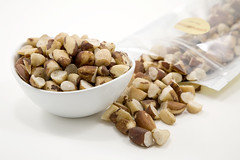
Eat 1-2 Brazil nuts per day to get the selenium you need. And you need the selenium so that you can keep your body's supply of at least 3 other nutrients intact: vitamin C, glutathione, and vitamin E.

If you don't like eating nuts, there is also the ground brazil nut protein powder that I add 1 tablespoon to my gluten-free pancake batter recipe or any other baking efforts to give that nutrient boost and extra crisp.

Selenium is a very important antioxidant and is known to be a depleted mineral from U.S. soil. If you've taken medications in the cortisol family, you are particularly vulnerable to selenium deficiency. Also, you can combat heart disease and arthritis by being a nutty eater.

Read more from this great resource guide.